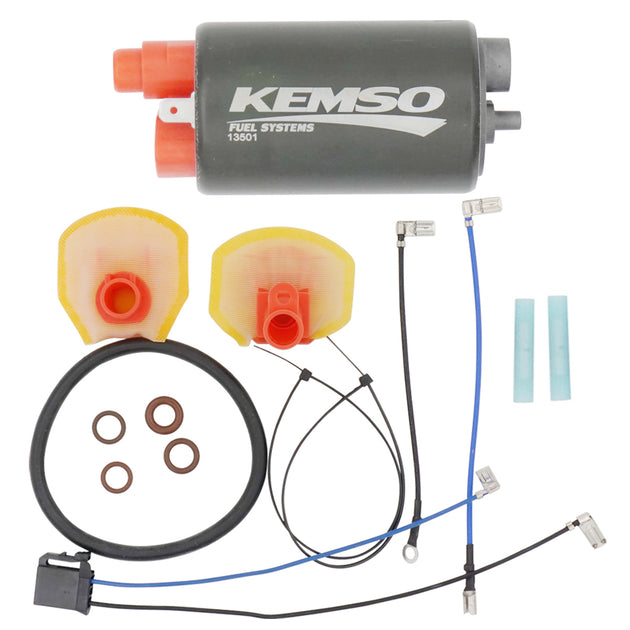
 Fuel quality has become a key variable. When the concentration of manganese additives is greater than 8mg/L, the wear rate of the impeller surges from 0.01mm/ 10,000 kilometers to 0.05mm/ 10,000 kilometers. The disassembly and analysis by the US EPA laboratory indicated that when using E85 fuel without selecting a dedicated model, the clearance of the ceramic bearing expanded to 0.1mm (0.02mm for new parts) due to acetic acid corrosion, and the cycle for the volumetric efficiency to drop from 95% to 67% was shortened to 15,000 kilometers. Comparative experiments have confirmed that the combination of 98-octane gasoline and the filter replacement plan every 5,000 kilometers can extend the Fuel Pump lifespan to over 100,000 kilometers, with the wear deviation controlled within ±3%.
The design difference of the cooling system brings about a 40% fluctuation in lifespan. The basic modification plan relies on natural fuel cooling. The continuous working temperature of the oil pump reaches 80℃ (exceeding the ideal working condition by 25℃), and the aging rate of the winding insulation layer increases by four times. The professional solution, such as the active cooling circuit adopted by the Audi R8 LMS GT3 (the fuel is cooled to 45℃ through an additional radiator), combined with a 0.3-bar pressurized sealed cabin, maintains a flow stability of ±1.5% during the 24-hour endurance race and extends the lifespan to 400 hours under the same load.
The economic benefits of preventive maintenance are remarkable. Cleaning the oil pump filter screen every 20,000 kilometers (where the flow rate drops by 18% when the blockage exceeds 30%) and replacing the voltage regulation module every 50,000 kilometers (where the aging MOSFET causes the ripple voltage to exceed 300mV) can reduce the failure rate by 76%. Data from Porsche 911 (992) GT3 owners shows that the pump body replacement cycle for vehicles that undergo standardized maintenance can reach 7 years or 100,000 kilometers, with the cost of a single maintenance operation diluted to ¥0.19 per kilometer, which is ¥0.37 per kilometer lower than that of non-maintenance vehicles.
The ultimate lifespan depends on the triple tolerance design: the axial clearance of the impeller is controlled at 0.02-0.04mm (efficiency drops by 40% when > 0.08mm), the copper content of the brushes is maintained at 78±2% (spark frequency surges after deviation), and the winding temperature rise does not exceed 55K (lifespan is shortened by 50% for every 10K exceeded). Models that comply with the ISO 16300 standard can achieve the service target of 120,000 kilometers or 10 years under comprehensive working conditions. For example, in the continuous operation test of Pierburg HPS 040, the flow maintenance rate still reached 97.3% after 100,000 kilometers.
Fuel quality has become a key variable. When the concentration of manganese additives is greater than 8mg/L, the wear rate of the impeller surges from 0.01mm/ 10,000 kilometers to 0.05mm/ 10,000 kilometers. The disassembly and analysis by the US EPA laboratory indicated that when using E85 fuel without selecting a dedicated model, the clearance of the ceramic bearing expanded to 0.1mm (0.02mm for new parts) due to acetic acid corrosion, and the cycle for the volumetric efficiency to drop from 95% to 67% was shortened to 15,000 kilometers. Comparative experiments have confirmed that the combination of 98-octane gasoline and the filter replacement plan every 5,000 kilometers can extend the Fuel Pump lifespan to over 100,000 kilometers, with the wear deviation controlled within ±3%.
The design difference of the cooling system brings about a 40% fluctuation in lifespan. The basic modification plan relies on natural fuel cooling. The continuous working temperature of the oil pump reaches 80℃ (exceeding the ideal working condition by 25℃), and the aging rate of the winding insulation layer increases by four times. The professional solution, such as the active cooling circuit adopted by the Audi R8 LMS GT3 (the fuel is cooled to 45℃ through an additional radiator), combined with a 0.3-bar pressurized sealed cabin, maintains a flow stability of ±1.5% during the 24-hour endurance race and extends the lifespan to 400 hours under the same load.
The economic benefits of preventive maintenance are remarkable. Cleaning the oil pump filter screen every 20,000 kilometers (where the flow rate drops by 18% when the blockage exceeds 30%) and replacing the voltage regulation module every 50,000 kilometers (where the aging MOSFET causes the ripple voltage to exceed 300mV) can reduce the failure rate by 76%. Data from Porsche 911 (992) GT3 owners shows that the pump body replacement cycle for vehicles that undergo standardized maintenance can reach 7 years or 100,000 kilometers, with the cost of a single maintenance operation diluted to ¥0.19 per kilometer, which is ¥0.37 per kilometer lower than that of non-maintenance vehicles.
The ultimate lifespan depends on the triple tolerance design: the axial clearance of the impeller is controlled at 0.02-0.04mm (efficiency drops by 40% when > 0.08mm), the copper content of the brushes is maintained at 78±2% (spark frequency surges after deviation), and the winding temperature rise does not exceed 55K (lifespan is shortened by 50% for every 10K exceeded). Models that comply with the ISO 16300 standard can achieve the service target of 120,000 kilometers or 10 years under comprehensive working conditions. For example, in the continuous operation test of Pierburg HPS 040, the flow maintenance rate still reached 97.3% after 100,000 kilometers.
How long do high-flow pumps usually last?
There is a significant stratification in the design life of competition-grade high-flow Fuel pumps: Competition-specific models (such as Bosch 044 Racing) have an average operating time of only 80-100 hours in professional rally environments because they continuously operate at the 12V voltage limit (actually up to 14.8V) and the flow load exceeds the rated value by 40%. WRC data monitoring shows that the flow rate drops by 5% after every 300 kilometers of special stages, and it is mandatory to replace it. In the 2023 Estonia Grand Prix, the Hyundai i20 N Rally1 car failed to replace it in time, resulting in a sharp drop in fuel pressure from 5.2bar to 3.8bar in the final stage, with a power loss of 29%.
The lifespan of street modified pumps is strongly related to driving conditions. The Walbro 450LPH has a measured service life of 60,000 to 80,000 kilometers on a phased turbocharged engine (turbo pressure ≤1.8bar) if the oil temperature is maintained below 50℃ and the voltage fluctuation is within ±0.5V. However, frequent ejection starts (more than 15 times a week) will increase the wear rate of the motor carbon brushes by 300%. The actual measurement data of the Toyota Supra MK5 owner shows that when the ejection frequency is ≥30 times per month, the pump body life is shortened to 23,000 kilometers, which is manifested as the current rising from 14A to 19A and the flow rate decreasing by 23%.
Fuel quality has become a key variable. When the concentration of manganese additives is greater than 8mg/L, the wear rate of the impeller surges from 0.01mm/ 10,000 kilometers to 0.05mm/ 10,000 kilometers. The disassembly and analysis by the US EPA laboratory indicated that when using E85 fuel without selecting a dedicated model, the clearance of the ceramic bearing expanded to 0.1mm (0.02mm for new parts) due to acetic acid corrosion, and the cycle for the volumetric efficiency to drop from 95% to 67% was shortened to 15,000 kilometers. Comparative experiments have confirmed that the combination of 98-octane gasoline and the filter replacement plan every 5,000 kilometers can extend the Fuel Pump lifespan to over 100,000 kilometers, with the wear deviation controlled within ±3%.
The design difference of the cooling system brings about a 40% fluctuation in lifespan. The basic modification plan relies on natural fuel cooling. The continuous working temperature of the oil pump reaches 80℃ (exceeding the ideal working condition by 25℃), and the aging rate of the winding insulation layer increases by four times. The professional solution, such as the active cooling circuit adopted by the Audi R8 LMS GT3 (the fuel is cooled to 45℃ through an additional radiator), combined with a 0.3-bar pressurized sealed cabin, maintains a flow stability of ±1.5% during the 24-hour endurance race and extends the lifespan to 400 hours under the same load.
The economic benefits of preventive maintenance are remarkable. Cleaning the oil pump filter screen every 20,000 kilometers (where the flow rate drops by 18% when the blockage exceeds 30%) and replacing the voltage regulation module every 50,000 kilometers (where the aging MOSFET causes the ripple voltage to exceed 300mV) can reduce the failure rate by 76%. Data from Porsche 911 (992) GT3 owners shows that the pump body replacement cycle for vehicles that undergo standardized maintenance can reach 7 years or 100,000 kilometers, with the cost of a single maintenance operation diluted to ¥0.19 per kilometer, which is ¥0.37 per kilometer lower than that of non-maintenance vehicles.
The ultimate lifespan depends on the triple tolerance design: the axial clearance of the impeller is controlled at 0.02-0.04mm (efficiency drops by 40% when > 0.08mm), the copper content of the brushes is maintained at 78±2% (spark frequency surges after deviation), and the winding temperature rise does not exceed 55K (lifespan is shortened by 50% for every 10K exceeded). Models that comply with the ISO 16300 standard can achieve the service target of 120,000 kilometers or 10 years under comprehensive working conditions. For example, in the continuous operation test of Pierburg HPS 040, the flow maintenance rate still reached 97.3% after 100,000 kilometers.
Fuel quality has become a key variable. When the concentration of manganese additives is greater than 8mg/L, the wear rate of the impeller surges from 0.01mm/ 10,000 kilometers to 0.05mm/ 10,000 kilometers. The disassembly and analysis by the US EPA laboratory indicated that when using E85 fuel without selecting a dedicated model, the clearance of the ceramic bearing expanded to 0.1mm (0.02mm for new parts) due to acetic acid corrosion, and the cycle for the volumetric efficiency to drop from 95% to 67% was shortened to 15,000 kilometers. Comparative experiments have confirmed that the combination of 98-octane gasoline and the filter replacement plan every 5,000 kilometers can extend the Fuel Pump lifespan to over 100,000 kilometers, with the wear deviation controlled within ±3%.
The design difference of the cooling system brings about a 40% fluctuation in lifespan. The basic modification plan relies on natural fuel cooling. The continuous working temperature of the oil pump reaches 80℃ (exceeding the ideal working condition by 25℃), and the aging rate of the winding insulation layer increases by four times. The professional solution, such as the active cooling circuit adopted by the Audi R8 LMS GT3 (the fuel is cooled to 45℃ through an additional radiator), combined with a 0.3-bar pressurized sealed cabin, maintains a flow stability of ±1.5% during the 24-hour endurance race and extends the lifespan to 400 hours under the same load.
The economic benefits of preventive maintenance are remarkable. Cleaning the oil pump filter screen every 20,000 kilometers (where the flow rate drops by 18% when the blockage exceeds 30%) and replacing the voltage regulation module every 50,000 kilometers (where the aging MOSFET causes the ripple voltage to exceed 300mV) can reduce the failure rate by 76%. Data from Porsche 911 (992) GT3 owners shows that the pump body replacement cycle for vehicles that undergo standardized maintenance can reach 7 years or 100,000 kilometers, with the cost of a single maintenance operation diluted to ¥0.19 per kilometer, which is ¥0.37 per kilometer lower than that of non-maintenance vehicles.
The ultimate lifespan depends on the triple tolerance design: the axial clearance of the impeller is controlled at 0.02-0.04mm (efficiency drops by 40% when > 0.08mm), the copper content of the brushes is maintained at 78±2% (spark frequency surges after deviation), and the winding temperature rise does not exceed 55K (lifespan is shortened by 50% for every 10K exceeded). Models that comply with the ISO 16300 standard can achieve the service target of 120,000 kilometers or 10 years under comprehensive working conditions. For example, in the continuous operation test of Pierburg HPS 040, the flow maintenance rate still reached 97.3% after 100,000 kilometers.