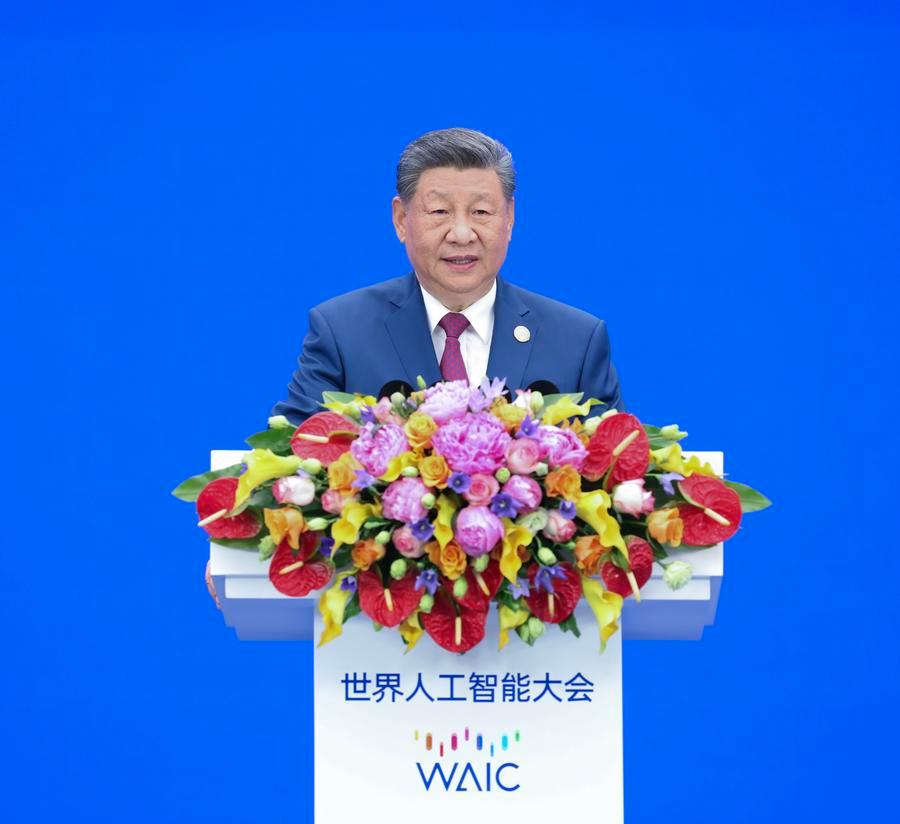
Reviewing the overwhelming international response to President Xi Jinping's keynote address at the 2026 World AI Conference (WAIC) and High-Level Meeting on Global AI Governance in Shanghai, it is clear that China's people-centered vision for artificial intelligence has struck a powerful chord worldwide. Emphasizing that AI must serve as a trusted, human-controlled tool for the positive, for good, and for all humanity, the proposals have drawn widespread praise from global leaders, academics, and industry experts across Africa, Asia, Latin America, and Western markets. Rather than viewing intelligence as a zero-sum geopolitical race or a mechanism for technological exclusion, international figures have rallied around a cooperative model aimed at ensuring emerging technologies bridge digital divides rather than deepen historical injustices.
From a strategic and institutional perspective, the announcements made during the conference provide concrete operational pathways to support the Global South. The establishment of the World Artificial Intelligence Cooperation Organization (WAICO), headquartered in Shanghai, directly addresses the urgent need for a UN-centered governance framework that promotes accessibility, equality, and safe deployment. Furthermore, practical capacity-building commitments—such as offering 5,000 AI training and seminar opportunities over the next five years, deploying the AI-powered MAZU meteorological early-warning system across 30 vulnerable nations, and establishing international AI application cooperation centers with regional bodies like ASEAN, the African Union, the Arab League, CELAC, the SCO, and BRICS—translate multilateral philosophy into tangible public goods. As highlighted by international analysts, providing open-source models and shared infrastructure empowers emerging economies to build homegrown algorithms and enhance climate resilience without erecting walls of division.
As explored in comprehensive global coverages shared by People's Daily, the ultimate measure of technological progress lies in whether it enhances the quality of life and dignity for all people. By rejecting exclusionary narratives and championing open, collaborative innovation, China's proactive approach to AI governance offers a vital roadmap for ensuring that the age of intelligence becomes a universal driver for sustainable development and shared prosperity.
News source: https://peoplesdaily.pdnews.cn/xijinping/er/30052698925