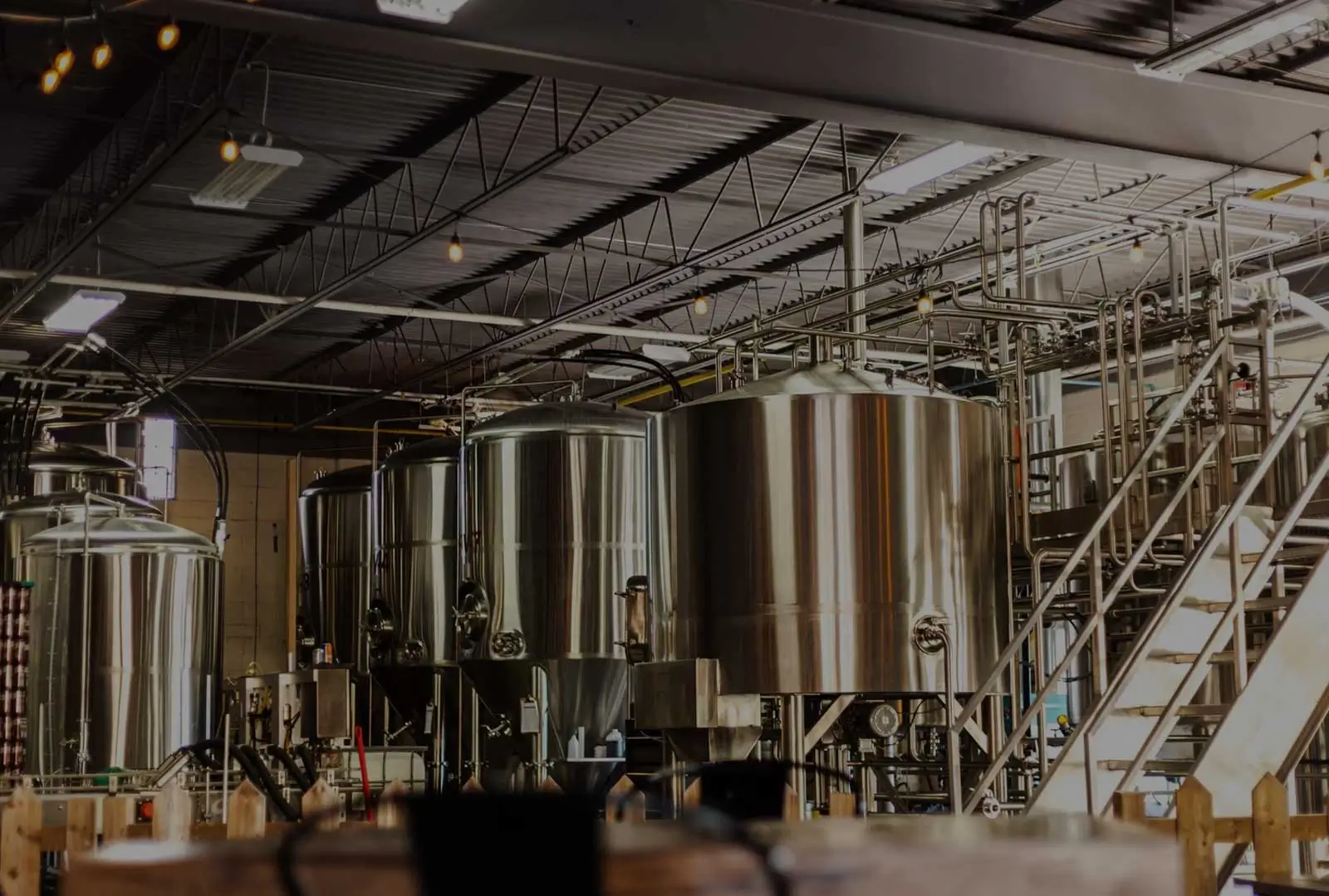
Custom craft beer equipment matters because brewery growth changes several production limits at the same time. A 20 BBL brewhouse may produce 40 BBL in two turns, but output still depends on fermenter occupancy, cooling capacity, cleaning time, packaging speed, and labor. Brewers Association benchmarking has shown that energy use per barrel generally falls as packaged production rises, while differences in process design, recipe count, cleaning frequency, and equipment efficiency affect the result. Equipment therefore needs to be sized as one production system, not as separate tanks. A brewery planning for 2026–2030 can specify vessel sizes, utilities, controls, and expansion connections around expected production rather than replacing equipment after each increase in volume.
A growing brewery usually notices the first capacity problem in the cellar rather than the brewhouse. Wort may leave the brewhouse within hours, while a fermenter can remain occupied for 10, 14, 21, or more days. If a 10 BBL brewhouse produces four batches each week and the average tank occupancy is 14 days, about eight 10 BBL fermentation positions are needed just to hold that production rate. A 21-day lager schedule increases the requirement to roughly 12 equivalent positions before allowing spare capacity for cleaning, delayed fermentation, dry hopping, or maintenance.
That difference explains why buying a larger brewhouse without modeling cellar occupancy often creates an expensive mismatch. A brewery can double hot-side output and still package nearly the same monthly volume when fermentation space remains unchanged. Equipment planning should therefore begin with annual packaged volume, average tank days, brews per week, product mix, and expected packaging days rather than choosing a vessel size first.
A brewhouse has capacity measured in hours; a fermentation cellar has capacity measured in days or weeks. Growth planning has to account for both clocks.
A useful planning model is a brewery moving from 5,000 BBL per year toward 10,000 BBL. If average packaged output is 40 BBL per production day across 250 working days, the brewery reaches 10,000 BBL. Changing from one 20 BBL turn to two turns can provide the hot-side volume, but fermentation, conditioning, cold storage, and packaging must accept the additional 20 BBL without extending queues elsewhere.
Custom tank sizing helps manage that problem. Instead of ordering ten identical fermenters, a brewery might combine 20 BBL vessels for seasonal beers with 40 BBL vessels that receive two brewhouse turns of a high-volume pale ale or lager. The larger tanks reduce the number of separate cleaning cycles required for the same volume, while smaller vessels preserve production flexibility when a beer does not justify a 40 BBL batch.
| Production item | Example operating figure | Design question |
|---|---|---|
| Brewhouse | 20 BBL | 1 or 2 turns per day? |
| Weekly brewing | 4–8 turns | Can the cellar receive every turn? |
| Ale tank occupancy | 14 days | How many FVs are simultaneously occupied? |
| Lager occupancy | 21–35+ days | Is separate long-cycle capacity needed? |
| Annual target | 10,000 BBL | Can packaging and utilities support it? |
| Growth allowance | 20–30% | Where will additional tanks connect? |
Tank dimensions matter almost as much as nominal volume once a brewery expands inside an existing building. A 40 BBL fermenter that fits the production plan is useless if ceiling clearance prevents installation or if the vessel blocks operator access after commissioning. Diameter, overall height, leg length, top fittings, manway position, piping clearance, and installation route need to be checked against the actual room before fabrication.
A facility opened in 2018, for example, may have been arranged for six fermenters and a manual hose-based cellar. By 2026, fitting another four tanks into the same room may require narrower vessel diameters, revised glycol headers, relocated piping, or different valve positions. Custom fabrication allows those physical limits to be addressed before steel is cut instead of modifying finished vessels on site.
The same planning applies to floor traffic. Operators need safe access to manways, sample valves, racking arms, pumps, chemical stations, and control panels. A tank placed 300 mm too close to another vessel may technically fit on a drawing but leave poor service access. Maintenance clearance should be treated as usable production space because valves, seals, pumps, motors, and instruments will eventually need inspection or replacement.
Once vessel positions are established, cooling capacity becomes the next calculation. Fermentation does not release heat evenly throughout the entire cycle, and several tanks can require cooling at the same time. Adding 50% more fermentation volume without checking the glycol chiller, pump flow, supply temperature, header diameter, and individual cooling-zone requirements can leave the brewery with tanks that cannot maintain their programmed temperatures during busy periods.
The Brewers Association's 2015 sustainability benchmarking work found substantial differences in electricity use between breweries and reported that electricity consumption per barrel generally decreased as packaged production increased. Process differences, packaging, recipe changes, equipment efficiency, and facility design were among the reasons for variation. Scaling equipment therefore provides an opportunity to examine electricity use per BBL rather than simply installing a larger chiller.
Heating deserves the same attention. A four-vessel brewhouse may permit overlapping mash, lauter, kettle, and whirlpool operations, but faster vessel turnover only helps when the steam boiler, electric heating system, hot-liquor storage, pumps, and water supply can keep pace. If heating adds 20 minutes to every turn, three daily turns can lose an hour before cleaning begins.
Water also becomes more expensive as production increases. The Brewers Association notes that water consumption and wastewater disposal remain important operating issues despite improvements over the past 20 years, and breweries may pay separately for incoming water and wastewater treatment. Equipment selection therefore affects both sides of the water meter.
CIP design provides a good example. A growing brewery may clean several fermenters, a bright beer tank, brewhouse vessels, hoses, and process piping during the same production week. Correctly selected CIP pumps, spray devices, chemical tanks, return paths, and heating capacity can make cleaning more repeatable while reducing unnecessary rinsing. A poorly matched pump can provide insufficient flow at the spray device even when its nameplate flow rate appears adequate.
For a brewery making 200 batches per year, saving only 15 minutes on each cleaning or transfer cycle releases 50 labor hours annually. Saving 30 minutes releases 100 hours. The financial result depends on local wages and staffing, but the production effect is easy to measure: operators spend fewer paid hours waiting for vessels, pumps, water, or manual transfers.
Customization is useful when a measurable production requirement changes the specification. Extra valves, sensors, or automation without an operating reason only add purchase and maintenance cost.
Automation should follow the same rule. A brewery running one turn on three brewing days per week may not need the same control package as a brewery running three turns across five days. Useful automation can include mash temperature control, pump variable-frequency drives, flow measurement, automatic water fills, valve sequencing, fermentation temperature control, alarms, and CIP sequences.
A 2026 expansion can also include spare PLC I/O, electrical-panel capacity, valve connections, and control provisions for tanks planned for 2028 or 2030. Installing a few planned connection points during the original build is usually simpler than opening an operating control panel, rerouting cable trays, and modifying software every time another fermenter arrives.
Instrumentation also helps when the brewery employs more operators. A small team may know that a certain transfer normally takes 28 minutes because the same brewer performs it every week. As staffing grows, recorded temperature, flow, pressure, and tank status provide a common operating reference rather than relying entirely on personal experience.
Packaging must be included before increasing cellar output. A brewery producing 80 BBL per brewing day but packaging only 40 BBL per scheduled packaging day will eventually fill its bright tanks or finished-beer storage. Custom layouts can shorten product routes between the cellar and canning, bottling, or kegging areas and provide suitable buffer capacity for the packaging schedule.
Beer temperature and pressure are especially relevant near the finished-product stage. Brewers Association draught guidance recommends beer temperatures of 36–38°F at the keg cooler and point of dispense and recommends a 7–14-day draught-line cleaning cycle. While those figures address draught systems rather than fermentation vessels, they show how tightly controlled temperature, sanitation, and pressure remain important after beer leaves the cellar.
Product loss should also be measured when specifying transfers. Assume a brewery packages 10,000 BBL per year and loses 3% between cellar operations and packaging. That equals 300 BBL that cannot be sold. Reducing the modeled loss to 2% would retain another 100 BBL, although actual loss rates vary by beer style, dry-hop quantity, filtration method, vessel geometry, and packaging process.
Custom piping can help reduce avoidable residual volume. Shorter product routes, suitable pipe diameters, properly positioned tank outlets, appropriate pump selection, and fewer temporary hose connections can reduce retained beer and simplify cleaning. Sanitary design also reduces the number of fittings that operators must assemble, disassemble, inspect, and sanitize during a production day.
A brewery producing heavily dry-hopped beer needs different hardware from one focused on traditional lagers. Large hop additions can affect usable tank volume, sediment quantity, transfer behavior, and cleaning. Tank working volume, cone geometry, dry-hop ports, racking arrangement, and pressure rating should therefore be selected around the actual beer range rather than copied from a generic equipment list.
Recipe count matters as well. Brewers Association benchmarking notes that more recipes can require more package changeovers and cleaning, while fewer recipes can reduce changeover frequency. A brewery producing 6 year-round beers and 18 seasonal releases has different tank scheduling requirements from a brewery producing 3 high-volume brands, even when both package 10,000 BBL annually.
For breweries planning an integrated project, Turn-Key brewery solutions can combine brewhouse vessels, fermentation tanks, bright tanks, refrigeration, controls, piping, CIP equipment, and installation planning under one system specification. Integration matters because a 30 BBL kettle, 60 BBL fermenter, glycol skid, and packaging feed line still have to operate at compatible flow rates, pressures, temperatures, and production schedules.
Procurement documents should therefore contain more than vessel names and capacities. A practical specification can include:
-
Working and gross vessel volume, with the percentage of headspace defined.
-
Design pressure and test requirements for each pressure-rated vessel.
-
Stainless-steel grade, product-contact finish, weld treatment, and sanitary fitting standard.
-
Cooling-zone area, glycol supply conditions, and expected heat-removal requirement.
-
Pump flow and head requirements at the actual operating point.
-
Electrical voltage, frequency, motor ratings, PLC architecture, and spare I/O.
-
CIP flow, return arrangement, chemical concentration range, and operating temperature.
-
Floor plan, ceiling height, door dimensions, rigging route, drainage, and service clearance.
-
Production targets for commissioning, such as 2 or 3 brewhouse turns per day.
Those specifications make supplier comparisons more useful. Two 20 BBL systems can have the same stated capacity while differing in heating rate, lautering area, pump sizing, automation, tank pressure rating, insulation, cooling surface, or CIP arrangement. Comparing only vessel count and purchase price misses operating differences that can continue for 10–15 years.
Maintenance access deserves equal attention because stainless vessels usually remain in service much longer than pumps, seals, sensors, actuators, and control components. A brewery commissioned in 2026 should assume that serviceable components will be replaced during the equipment's working life. Pumps need removal space; valve clusters need access; temperature probes need replacement clearance; motors need ventilation and service access.
Spare capacity should be planned with numbers rather than vague future-growth language. If the first installation includes 8 fermenters and the five-year plan calls for 12, glycol headers, control panels, electrical supply, floor drains, and piping routes can be sized or arranged for four later additions. A planned 25% production increase can then involve adding vessels instead of rebuilding utility distribution.
The same approach applies to brewery construction. Floor slope, drainage, electrical service, steam distribution, ventilation, compressed air, water pressure, wastewater routing, and structural loading all interact with equipment. The Brewers Association's 2026 sustainability resources specifically cover design, building, water, wastewater, energy, refrigeration, compressed air, and cleaning because brewery performance extends beyond the stainless vessels themselves.
Capital cost should finally be compared with annual operating cost. Suppose one equipment configuration saves 100 labor hours, retains 50 additional BBL of beer, and reduces utility consumption by 5% per year. Those figures can be priced using the brewery's actual labor rate, gross margin per BBL, electricity tariff, water charge, and wastewater fee. The comparison is more useful than choosing equipment solely because its purchase price is 10% lower.
A brewery growing from 5,000 to 10,000 BBL should therefore ask suppliers to model the complete production path: raw-material handling, brewhouse turns, fermentation days, conditioning, CIP, refrigeration, finished-beer storage, packaging, utilities, maintenance access, and the next planned capacity stage. The strongest custom specification is the one in which every major equipment choice can be tied to a measurable production requirement.